
Thermal Management for Rotating Equipment
Industrial thermal solutions for rotating equipment applications control how heat is generated, transferred, removed, or recovered across compressors, blowers, pumps, vacuum equipment, and compressed air treatment systems. Effective thermal management helps equipment remain within acceptable operating limits while supporting reliable process conditions and efficient utility use.
Relevant Solutions evaluates operating temperature, heat load, pressure, flow, duty cycle, ambient conditions, fluid properties, air quality requirements, controls, and available utilities before recommending individual equipment or an integrated package. The resulting solution may involve cooling, heat recovery, air drying, thermal fluid circulation, vacuum processing, or process airflow.
Within the rotating equipment category, Gardner Denver and Champion support thermal management primarily through compressor cooling and compressed air treatment. Gardner Denver also offers heat-of-compression drying and heat recovery options on select compressor configurations, while Champion offers refrigerated and desiccant air dryers for a range of inlet temperatures, flow requirements, and pressure dew point targets.
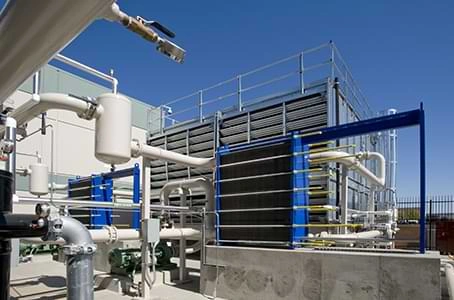
Industrial Thermal Capabilities
Thermal performance depends on how the complete rotating equipment system handles heat, moisture, airflow, and process fluids. Relevant Solutions reviews the equipment duty and surrounding system so that coolers, dryers, pumps, blowers, vacuum equipment, piping, controls, and heat recovery components operate together as intended.
Compressor Cooling and Heat Recovery
Air compression generates heat that must be controlled to protect the compressor and downstream system. Depending on the compressor technology and operating conditions, thermal management may include air-cooled or water-cooled aftercoolers, intercoolers, oil coolers, closed-loop cooling circuits, ventilation, and compressor heat recovery equipment.
Select Gardner Denver oil-free compressor configurations are available with heat recovery options. Gardner Denver Ultima compressors use closed-loop water cooling and can recover heat from major compressor components for compatible plant processes. Ingersoll Rand also offers turnkey heat recovery packages for suitable oil-free compressors, using pumps, a heat exchanger, controls, and related components to transfer compressor heat to another plant load.
Potential uses for recovered heat include process water heating, space heating, boiler feedwater preheating, sanitation water, and other applications with a compatible temperature profile. The practical value of heat recovery depends on compressor operating hours, available heat, seasonal demand, piping distance, and the facility’s ability to use the recovered energy.
Heat-of-Compression and Refrigerated Air Drying
Compressed air drying systems manage temperature and moisture after compression. Refrigerated air dryers cool compressed air so moisture condenses and can be separated, while desiccant dryers use adsorption and a controlled regeneration cycle to achieve lower pressure dew points for moisture-sensitive applications.
Gardner Denver DHC heat-of-compression dryers reuse thermal energy generated during oil-free compression to regenerate the offline desiccant bed. This approach reduces the need for external regeneration heat and supports efficient drying in larger oil-free compressed air systems. Gardner Denver also offers refrigerated, heatless, heated, and blower purge dryer technologies for different flow, dew point, and energy requirements.
Champion offers cycling and non-cycling refrigerated dryers, high-inlet-temperature refrigerated dryers designed for reciprocating compressor installations, and multiple desiccant dryer configurations. These products support moisture control, stable dew point performance, and protection for pneumatic equipment, piping, instruments, and production processes.
Thermal Fluid and Hot Oil Circulation
Thermal fluid circulation systems require pumps that can move hot oil or another heat transfer medium at the required temperature, flow, and pressure. Pump selection must account for fluid viscosity, vapor pressure, materials of construction, seal arrangement, suction conditions, and the effect of temperature on bearings and other mechanical components.
Travaini TCD hot oil circulation pumps are designed for thermal oil service up to 320°C, or 608°F. The pump design limits heat transfer from the casing toward the bearing and seal area. Travaini also offers centrifugal and magnetic drive pump technologies that may support cooling water, heated process liquids, and temperature-sensitive fluid transfer when matched to the application.
Vacuum Processing, Evaporation, and Chilling
Vacuum systems can reduce the boiling point of a liquid, allowing evaporation, concentration, distillation, drying, or cooling to occur at lower process temperatures. This can help protect heat-sensitive materials, improve solvent recovery, reduce thermal degradation, and support controlled moisture removal.
MD-Kinney ACRP liquid ring vacuum systems are used in applications that include dehydration evaporators, solvent distillation and vapor recovery, and vacuum chilling. MD-Kinney rotary piston pumps also support drying chambers, degasifiers, and process vessel evacuation. NES Company liquid ring and engineered vacuum systems can be applied to evaporation, distillation, drying, refrigeration, and other wet or condensable-vapor services.
Process Air and Equipment Cooling
Industrial blowers move air or gas for process air cooling, equipment ventilation, combustion support, and temperature control. Proper selection requires review of flow, pressure, inlet temperature, gas composition, ambient conditions, turndown requirements, noise limits, and the expected operating profile.
Gardner Denver positive displacement blowers and MD-Kinney M-D Pneumatics blowers can support continuous-duty air movement in industrial systems. Relevant Solutions can help size blower packages and select materials, seals, controls, and accessories for cooling, ventilation, combustion air, and other temperature-related airflow requirements.
Cooling Water and Condensate Circulation
Pumps used in thermal systems may circulate cooling water, glycol mixtures, condensate, hot liquids, or other heat transfer fluids. The required pump type depends on temperature, chemistry, solids content, system pressure, available net positive suction head, and the consequences of leakage or loss of flow.
Relevant Solutions offers centrifugal, gear, magnetic drive, and other pump technologies from manufacturers such as Travaini and Titan. NES Company also provides condensate and vacuum condensate pumping equipment. These options can be evaluated for cooling loops, condensate return, utility circulation, and related rotating equipment duties where the selected materials and operating limits match the service.
Industrial Thermal Solution Applications
Industrial thermal solutions support facilities that must control temperature, moisture, heat transfer, or airflow while maintaining continuous production. The correct rotating equipment arrangement depends on the process objective, utility conditions, product sensitivity, contamination risk, and required operating range.
Chemical and Petrochemical Processing
Chemical and petrochemical facilities use hot oil pumps, process pumps, blowers, and vacuum systems for heating loops, cooling circuits, evaporation, distillation, solvent recovery, degassing, and vapor handling. Equipment selection must reflect process chemistry, temperature, hazardous area requirements, seal design, and materials compatibility.
Food, Beverage, and Pharmaceutical Operations
Temperature-sensitive production can require oil-free compressed air, low pressure dew points, vacuum drying, vacuum cooling, or lower-temperature evaporation. Properly selected rotating equipment can help control moisture, protect product quality, limit contamination risk, and support repeatable processing conditions.
Vacuum Drying, Distillation, and Evaporation
Vacuum pumps and liquid ring systems are used where a process must remove water or solvents, lower boiling temperatures, condense vapors, or maintain stable vacuum conditions. These applications may include drying chambers, evaporators, solvent recovery systems, refrigeration processes, and vacuum chilling.
Compressed Air Utilities
Compressor rooms and plant air systems require effective heat rejection, ventilation, aftercooling, moisture removal, and temperature control. A coordinated compressor, cooler, dryer, drain, filtration, and control strategy helps protect downstream equipment and maintain the required compressed air quality.
Manufacturing and Process Cooling
Manufacturing operations use blowers and pumps to remove heat from equipment, circulate cooling fluids, ventilate production areas, and stabilize process temperatures. Compressors and air dryers also help deliver clean, dry air for controls, tooling, material handling, and product contact applications.
Thermal Solution Brands Available from Relevant Solutions
Manufacturer selection should begin with the actual temperature, pressure, flow, fluid, gas, and air quality requirements. Relevant Solutions can compare available rotating equipment technologies and identify the manufacturer, equipment configuration, and accessories that best fit the installed system and operating duty within applicable coverage areas.

Gardner Denver
Gardner Denver provides industrial air compressors, compressed air treatment equipment, and blowers. Thermal-related options include compressor aftercooling, air-cooled or water-cooled configurations, heat recovery on select oil-free compressors, refrigerated air dryers, and DHC heat-of-compression desiccant dryers.
Champion
Champion provides reciprocating and rotary air compressors along with a broad air treatment portfolio. Its thermal-management fit includes high-inlet-temperature, cycling, and non-cycling refrigerated dryers, plus heatless and blower-supported desiccant dryer configurations for compressed air moisture control.

Ingersoll Rand
Ingersoll Rand offers oil-free, oil-flooded, reciprocating, rotary screw, and centrifugal compressed air equipment, along with air treatment and system accessories. Available thermal options include compressor cooling, compressed air dryers, energy recovery equipment for oil-lubricated compressors, and turnkey heat recovery systems for suitable oil-free compressor installations.

Travaini Pumps
Travaini provides centrifugal pumps, hot oil pumps, liquid ring vacuum pumps, and engineered systems. The TCD Series is designed for thermal oil service up to 320°C, or 608°F, while Travaini vacuum technologies can support evaporation, drying, vapor handling, and other thermal process applications.
MD-Kinney and NES Company
MD-Kinney supplies mechanical and liquid ring vacuum equipment, vacuum boosters, blowers, and engineered systems for drying, chilling, evaporation, distillation, degassing, and vapor recovery. NES Company provides liquid ring, dry vacuum, condensate pumping, and engineered vacuum solutions for wet, condensable, and temperature-sensitive processes.

Titan
Titan provides industrial centrifugal, gear, diaphragm, and other pump technologies. Titan pumps may support cooling water, utility circulation, and process-fluid transfer where the selected pump construction, seal arrangement, temperature rating, and hydraulic performance meet the application requirements.
Engineered Thermal Packages and Lifecycle Support
Many industrial thermal solutions require more than one rotating asset. A complete scope may combine compressors, blowers, pumps, vacuum equipment, dryers, coolers, separators, receivers, piping, instrumentation, and controls so that the system reaches the required temperature, pressure, flow, vacuum level, or pressure dew point.
Relevant Solutions can evaluate the complete rotating equipment system and develop a practical equipment or package scope. The recommendation may include a replacement unit, an equipment upgrade, a compressor heat recovery package, a compressed air drying system, a vacuum package, or a skid-mounted thermal fluid circulation solution.
Support may include application review, equipment selection, system design, installation, startup, preventive maintenance, troubleshooting, repair, parts, and operating follow-up within applicable coverage areas. Product availability, manufacturer authorization, and service coverage can vary by location and application.
Select the Right Industrial Thermal Solution
The correct industrial thermal solution begins with verified process conditions and a clear thermal objective. Relevant Solutions can evaluate whether the requirement is best addressed through cooling, compressor heat recovery, compressed air drying, thermal fluid circulation, vacuum processing, process airflow, or a coordinated rotating equipment package.
Whether the project involves new equipment, replacement, expansion, or performance correction, our team can help define the duty and identify a practical rotating equipment solution. Contact our team at Relevant Solutions to discuss equipment selection, packaged systems, installation, service, parts, or lifecycle support within applicable coverage areas.
Frequently Asked Questions About Industrial Thermal Solutions
What are industrial thermal solutions?
How does compressor heat recovery work?
Compressor heat recovery transfers heat produced during compression to another usable plant load. Depending on the compressor and cooling arrangement, recovered heat may be used for process water, space heating, boiler feedwater preheating, sanitation water, or another compatible application. System value depends on compressor run hours and consistent demand for the recovered heat.
Which air dryer is used for high-inlet-temperature compressed air?
A high-inlet-temperature refrigerated dryer is commonly used when hot compressed air leaves a reciprocating compressor without a separate aftercooler. Champion CRH Series dryers are designed for elevated inlet temperatures. Dryer selection must still account for actual inlet temperature, flow, pressure, ambient conditions, and required pressure dew point.
What pump is used for hot oil circulation?
A purpose-designed hot oil centrifugal pump is commonly used for thermal fluid circulation. The selected pump must be rated for the fluid temperature and account for viscosity, suction conditions, seal design, materials, flow, and pressure. Travaini TCD pumps are designed for thermal oil service up to 320°C, or 608°F.
How can vacuum reduce process temperature?
Reducing pressure lowers the boiling point of a liquid. A vacuum system can therefore support evaporation, drying, chilling, distillation, or solvent recovery at a lower temperature than the same process would require at atmospheric pressure. This is useful for heat-sensitive products and processes where thermal degradation must be limited.
Do Gardner Denver and Champion offer thermal solutions for rotating equipment?
Yes, primarily within compressed air systems. Gardner Denver offers compressor cooling, heat recovery on select compressor configurations, refrigerated dryers, and heat-of-compression dryers. Champion offers high-inlet-temperature, cycling, and non-cycling refrigerated dryers, along with several desiccant dryer technologies. Exact product availability should be confirmed for the application and service area.
What information is needed to size a thermal solution?
Key data includes flow, pressure or vacuum level, inlet and outlet temperatures, heat load, fluid or gas properties, required pressure dew point, ambient conditions, duty cycle, available utilities, materials requirements, controls, and hazardous area classification. Existing equipment data and operating history also help define the correct scope.