Why “Downstream” Issues Often Look Like a Vacuum Booster Problem
If your vacuum booster is overheating, pulling high motor current, struggling to reach setpoint, or “losing capacity,” the root cause is often downstream of the booster: a restriction, closed or mis-positioned valve, saturated filter, blocked separator, undersized piping, excessive backpressure, or a process condition that spikes gas load where the booster is trying to work outside its intended differential pressure range. A quick isolation test and a few targeted checks can usually prove whether the booster is truly at fault or just reacting to a downstream problem.

Why “Downstream” Problems Mimic Booster Failure
A vacuum booster multiplies pumping speed, but it is still part of a system. When something downstream restricts flow or increases discharge pressure, the booster may run hotter, draw more current, and deliver less effective pumping at the process connection. Many booster setups also depend on a correctly sized backing pump and proper operating conditions, so a system-side change can look like a mechanical issue at the booster.
The Fastest Way to Prove It: The Isolation Test
When you need a decisive answer quickly, separate “booster-related symptoms” from “system or process behavior.” A vacuum booster cannot be operated by itself, it must run with a backing pump, so the goal is to lock the booster out and see how the backing vacuum pump performs on its own.
- 1.Isolate the booster from the process and place it in a safe locked-out condition per your procedure, so the booster cannot influence the system during the test.
- 2. Operate the backing vacuum pump on its own and check whether it reaches expected pressure, stability, and pump-down performance for that configuration.
- 3. If the backing pump behaves normally with the booster locked out, the issue often points to booster operation, booster controls, staging logic, or a downstream condition that only becomes problematic when the booster is in service. If the backing pump still struggles, the problem is more likely in the process side, downstream plumbing, leakage, contamination, or backing pump condition.

This troubleshooting approach is widely used because it narrows the fault domain without forcing the booster to run independently.
Practical note: many issues show up as slow pump-down or not reaching the usual pressure due to restrictions, leaks, or contamination in the system rather than a failed booster.
Common Downstream Causes That Create “Vacuum Booster Issues”
1) A Restriction After the Booster
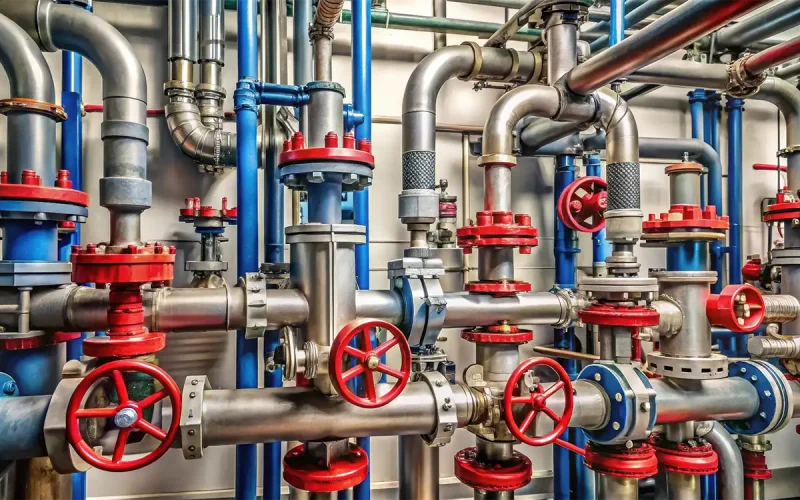
A partially closed valve, a collapsed flex hose, a plugged exhaust element, a fouled separator, or an undersized line can raise discharge pressure and choke flow. The booster responds by running hotter and working harder, and you see reduced system performance.
Quick checks
- Verify valve position indicators and actuator signals.
- Check differential pressure across downstream filters or separators.
- Look for crushed hoses, kinked piping, or recons.
2) Discharge Backpressure That Pushes the Booster Out of Its Comfort Zone
Roots-style boosters have limits on pressure differential and system conditions. If discharge pressure rises, the booster may overheat or draw higher current. Some booster designs use bypass or overflow strategies to protect operation, but they still depend on system conditions being in range.
Quick checks
- Compare current readings to baseline commissioning values.
- Confirm any bypass, relief, or overflow valve is operational and correctly set.
3) Gas Load Spike Downstream
If the process suddenly introduces more vapor, air ingress, or high flow demand, the booster can appear “weak,” because it is trying to move more gas than the system is configured to handle. This often shows up as slow pump-down or inability to reach setpoint until the load changes.
Quick checks
- Look for process step changes that coincide with the alarm.
- Confirm purge rates, bleed flows, or new consumers tied into the same header.
4) Backing Pump or Staging Limitations That Look Like Booster Trouble
Many boosters must be paired with an appropriately sized backing pump to operate correctly, and minimum backing capacity requirements are common across booster applications. If the backing pump is undersized, degraded, starved, or not sequenced correctly, the booster becomes the messenger that takes the blame.
For liquid ring backing pumps, service liquid condition can create the same “booster problem” symptoms. If the seal liquid is degraded, contaminated, or running hot, its vapor pressure increases, which reduces effective vacuum capability and changes the pump’s displacement behavior. The result can look like poor booster performance even when the booster is mechanically fine.
Quick checks
- Validate backing pump health, oil condition (if applicable), inlet filters, and suction conditions.
- Confirm staging logic is correct, including when the booster is allowed to start.
- If the backing pump is a liquid ring, verify seal liquid temperature, quality, and flow, and confirm heat exchanger performance and makeup water rate (as applicable).
Symptom To Cause Map
Use this table to get from “what you see” to “what to check” fast.
| What You See At The Booster | Likely Downstream Cause | Quick Verification |
|---|---|---|
| High motor current | Discharge restriction or high differential pressure | Check downstream valve positions, DP across filters, discharge pressure trend |
| Overheating | Elevated inlet pressure for extended periods, high load, or backpressure | Confirm operating pressures vs booster limits, check for restriction, verify bypass behavior |
| Slow pump-down | Restriction in pumping line, dirty system, gas load spike, or leak upstream of the booster | Perform isolation test, inspect line sizing and restrictions, check process steps, and perform a leak check on upstream connections, seals, and flanges |
| Cannot reach usual vacuum level | System leak, contamination, or restriction | Leak check process side, isolate sections, inspect separators, filters, and piping |
Quick Win Checklist for Maintenance and Reliability Teams
If you only have 30 to 60 minutes to diagnose, prioritize these in order:
- 1. Run the isolation test to separate pump train behavior from process behavior.
- 2. Verify downstream valve states (including automatic valves), then confirm signals match physical position.
- 3. Check restrictions: DP across filters, separator condition, hose integrity, and discharge path.
- 4. Confirm backing pump health and staging to make sure the booster is not being forced into a bad operating region.
- 5. Capture the loop: log the symptom, what you checked, and the confirmed root cause, then feed it back into PM and operator checklists.
Where Relevant Solutions Fits in the Fix
If your checks point to downstream restriction, control sequencing, or component wear, you usually need two things:
- (1) a reliable service path to validate the blower or booster condition, and
- (2) fast access to the right parts so you can restore airflow or vacuum without stretching downtime.
- For inspection, rebuild, and performance validation, reference Relevant Solutions’ Blower and Vacuum Service capabilities.
- For sourcing industrial components and spares through the Relevant ecosystem, explore Shop Relevant’s industrial product catalog.
Contact our team at Relevant Solutions today to review your vacuum system conditions and identify the fastest path to restore vacuum performance.
Frequently Asked Questions (FAQs)
What is the quickest test to confirm whether my vacuum booster is actually failing?
Run an isolation test, separate the process from the pump train, then verify whether the pump train reaches expected performance on its own. If it does, the problem is likely in the system or process side rather than the booster itself.
Can downstream restrictions really cause high motor current on a booster?
Yes. A restriction or increased discharge pressure can increase the work the booster must do, which often shows up as higher motor current and heat. Compare current draw to baseline commissioning values and check for discharge restrictions.
Why does my booster overheat even though it still runs?
Overheating commonly occurs when the booster operates at elevated inlet pressure or unfavorable differential pressure for too long, or when backpressure and gas load rise due to a downstream condition. Review operating pressure limits and look for restrictions and staging issues.
How do I know if the backing pump is part of the problem?
If the backing pump capacity is insufficient or performance has degraded, the booster may be forced into operating conditions where it cannot perform efficiently. Confirm backing pump health, inlet conditions, and that system sizing meets the booster’s staging guidance.
What should we document so the next event resolves faster?
Capture the symptom, operating pressures, valve states, DP across filters, what was isolated, and the confirmed root cause. Then update operator checks and PM steps so future troubleshooting is faster and more consistent.