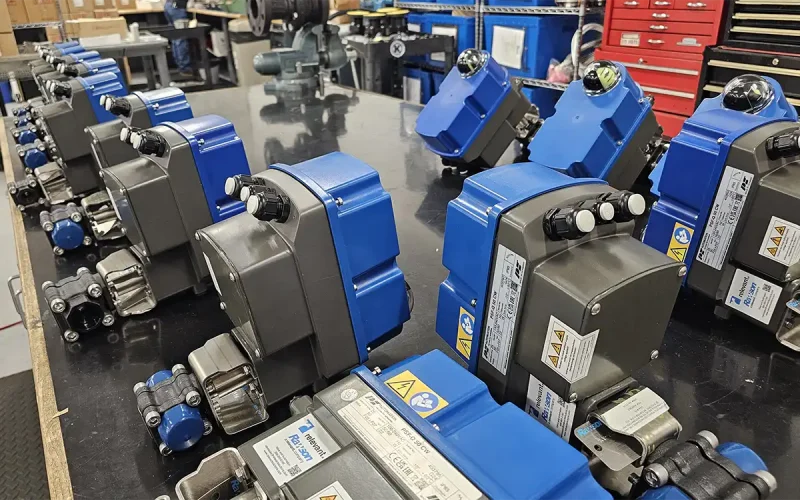
An effective industrial air compressor maintenance schedule combines daily operating checks, weekly and monthly inspections, and manufacturer-defined service at specific operating-hour or calendar intervals. Operators should routinely monitor lubricant levels, condensate, filters, leaks, pressure, temperature, vibration, belts, cooling surfaces, and safety devices, then replace lubricants, filters, separators, and other wear components when the compressor manufacturer specifies.
There is no single maintenance interval for every industrial compressor. Reciprocating, oil-flooded rotary screw, oil-free, and centrifugal compressors have different components and service needs, and intervals can vary by model, lubricant, environment, and run hours. The exact OEM manual should remain the controlling source for the maintenance program.
At Relevant Solutions, we help industrial facilities build compressor maintenance programs around the equipment actually installed, rather than forcing every asset into the same checklist. Our rotating equipment capabilities include scheduled inspections, consumable changes, vibration trending, oil analysis, diagnostics, repair, and customizable preventive maintenance programs. Learn more about our rotating equipment service contracts.
Why Does an Industrial Compressor Need a Maintenance Schedule?
A maintenance schedule gives plant teams a repeatable way to catch wear, contamination, leakage, and temperature problems before they interrupt production. It also helps align service labor and replacement parts with planned downtime instead of emergency repairs.
A compressor maintenance schedule turns maintenance into a planned reliability activity. Instead of waiting for high temperature, abnormal vibration, pressure loss, contamination, or shutdown, teams inspect known wear points before they develop into larger problems.
Compressed air can support actuators, controls, tooling, packaging, material handling, and production machinery at the same time, so a compressor issue can affect several parts of a manufacturing process.
Maintenance should also address the wider compressed air system. Filtration, cooling, lubrication, separators, drains, dryers, receivers, controls, and distribution leaks can all affect air quality, pressure stability, and compressor workload.
Recommended Industrial Air Compressor Maintenance Schedule
A useful schedule combines quick operator observations with deeper periodic inspections and OEM-defined run-hour service. The table below is a planning framework, so the exact manual for the installed compressor should always control the final interval and procedure.
Actual service intervals should be adjusted to the compressor model, operating hours, lubricant, environment, duty cycle, and manufacturer requirements.
| Maintenance Frequency | Typical Checks and Service | Primary Purpose |
|---|---|---|
| Daily or Each Shift | Check oil or coolant level where applicable, operating pressure, temperature, condensate drains, leaks, unusual noise, and vibration. | Detect developing problems before continued operation causes damage. |
| Weekly | Inspect intake condition, cooling surfaces, drains, guards, belts where fitted, and general compressor condition. | Catch restriction, contamination, looseness, or cooling issues early. |
| Monthly | Inspect for air and lubricant leaks, belt condition and tension, hoses, fasteners, coolers, drains, and system condition. | Identify deterioration that may not be obvious during daily rounds. |
| Quarterly or Semiannual | Review operating trends, filter condition, lubricant condition, vibration, and model-specific wear components. | Combine preventive service with condition-based maintenance. |
| OEM Run-Hour Interval | Replace specified lubricant, oil filters, air filters, separators, service kits, and other scheduled parts. | Restore filtration, lubrication, and separation performance. |
| Annual or Major Service | Complete OEM-required service, inspect controls and safety systems, evaluate air treatment equipment, and review system performance. | Establish equipment condition and prepare the next maintenance cycle. |
Note: This format works especially well in manufacturing because it combines three maintenance triggers: calendar time, actual compressor run hours, and equipment condition. A compressor operating continuously in a hot or dusty plant may require attention sooner than a lightly loaded compressor operating in a clean equipment room.
What Should Be Checked Daily, Weekly, and Monthly?
Daily, weekly, and monthly inspections create the operating baseline that makes condition changes easier to recognize. Each interval should become progressively more detailed while remaining simple enough for technicians to complete consistently.
Daily Compressor Maintenance
Daily compressor checks should be short enough to become part of the operator or maintenance technician’s normal routine. Check the lubricant or coolant level on lubricated equipment, review operating pressure and temperature, verify condensate is being removed correctly, and look for visible fluid or air leaks.
Listen for changes in mechanical sound, and note any increase in vibration, cycling frequency, or discharge temperature. For reciprocating equipment, these simple checks are particularly important because they help operators detect changes before they progress into larger mechanical problems.
Daily inspections also build trend awareness, making changes in pressure, temperature, vibration, and sound easier to recognize before they lead to a shutdown.
Weekly Compressor Maintenance
Weekly maintenance should go deeper into components that affect airflow, cooling, and mechanical condition. Inspect the air intake filter or restriction indicator, cooling surfaces, fans, guards, automatic drains, belts, and visible connections.
Include the compressor room in weekly checks because blocked ventilation, dirty coolers, high ambient temperature, or restricted intake airflow can increase thermal stress.
Monthly Compressor Maintenance
Monthly maintenance is a good point for a more deliberate mechanical and compressed air system inspection. Look for air leaks at connections, assess belt condition and tension where applicable, inspect hoses and fasteners, check cooler cleanliness, confirm condensate drains are functioning, and review operating trends recorded during the month.
Include integrated dryers and associated filtration in the monthly inspection, and compare current operating data against the plant’s established baseline.
How Do Operating-Hour Maintenance Intervals Work?
Operating hours often tell maintenance teams more about actual equipment use than the calendar alone. Run-hour triggers should be paired with calendar limits and condition data so lightly used and continuously loaded compressors are not serviced as though they experience the same duty.
Two compressors installed on the same day may accumulate very different workloads. For example, some Ingersoll Rand rotary screw maintenance kits use 2,000 run hours or one year, whichever comes first, for specific UP6 and R-Series models.
Champion also identifies 2,000 hours as a major preventive maintenance point in published oil-flooded rotary screw guidance, including filtration, separator service, coolant checks, leak inspection, and condition monitoring.
These examples do not make 2,000 hours universal. Gardner Denver requirements also vary by model. Use the operating-hour interval specified for the exact compressor, then move service earlier when inspection data or severe conditions justify it.
How Maintenance Changes by Compressor Type
Compressor technology determines which components carry the highest maintenance risk and which service tasks matter most. A useful schedule therefore starts with compressor type, then adds the manufacturer’s model-specific interval and the plant’s operating conditions.
Reciprocating Compressors
Oil-Flooded Rotary Screw Compressors
Oil-flooded rotary screw compressors rely on lubricant, oil and intake filtration, cooling, and air-oil separation. Monitor lubricant condition, filter restriction, separator performance, temperature, leaks, drains, cooling surfaces, and the drive system.
Filter or separator restriction can increase pressure differential, while inadequate cooling or lubrication can create additional thermal and mechanical stress.
Oil-Free and Centrifugal Compressors
Oil-free and centrifugal compressors need their own maintenance plans. Oil-free technology removes certain lubricant-related requirements from the compression chamber but introduces model-specific airend, cooling, filtration, gear, seal, control, or coating considerations.
Centrifugal compressors rely on specialized lubrication, bearings, coolers, controls, instrumentation, and aerodynamic performance, so OEM-defined inspections are especially important.
How Should Maintenance Differ by Compressor Manufacturer?
Manufacturer guidance matters because service kits, lubricant specifications, component designs, and maintenance intervals vary by compressor family. At Relevant Solutions, we support major industrial brands while building service plans around the exact model and application rather than the logo alone.
Our rotating equipment portfolio includes Gardner Denver, Champion, and Ingersoll Rand compressors, with MD-Kinney supporting adjacent blower and vacuum applications.
| Manufacturer | Maintenance Focus | Relevant Solutions Application |
|---|---|---|
| Gardner Denver | Model-specific filtration, lubrication, separators, cooling, valves, and scheduled service. | Industrial compressed air and broader compression applications. |
| Champion | Reciprocating and rotary screw preventive maintenance, filtration, lubrication, condensate management, and service kits. | Manufacturing and commercial compressed air systems. |
| Ingersoll Rand | Reciprocating, rotary screw, and centrifugal maintenance with model-specific service intervals and OEM parts. | Broad industrial compressed air applications. |
| MD-Kinney | Blower and vacuum pump lubrication, inspection, startup checks, and model-specific maintenance. | Vacuum and blower systems adjacent to plant compressed air infrastructure. |
Through Shop Relevant’s air compressor parts selection, we provide access to maintenance and replacement components for supported equipment, including many Ingersoll Rand and Gardner Denver parts.
Gardner Denver service planning should follow the exact installed model. Champion provides maintenance guidance for reciprocating and oil-flooded rotary screw equipment, while Ingersoll Rand publishes model-specific service resources and kits.
MD-Kinney should be treated separately from conventional plant-air compressors because its Relevant Solutions portfolio centers on industrial blowers, vacuum pumps, and vacuum boosters. Those assets should follow their own manuals, lubricant requirements, and condition-monitoring practices.
When Should You Service a Compressor Before the Scheduled Interval?
A scheduled interval is a planning threshold, not a reason to ignore changing equipment condition. Abnormal operating data, repeated alarms, or severe environmental exposure should trigger investigation before the next planned service date.
Do not wait for the next milestone when the compressor develops abnormal vibration, repeated high-temperature warnings, falling pressure or capacity, lubricant leakage, unusual noise, excessive condensate, filter restriction, frequent cycling, or changes in air quality.
High dust, heat, humidity, contamination, continuous duty, and poor compressor-room ventilation can accelerate filter loading, lubricant deterioration, corrosion, and thermal stress.
Condition monitoring helps determine when that earlier service is necessary. At Relevant Solutions, our preventive maintenance programs can combine inspections, consumable changes, vibration trending, oil analysis, diagnostics, and OEM intervals with the actual condition of the asset.
How to Build a Better Compressor Preventive Maintenance Program
The best maintenance programs connect OEM requirements with asset history, operating data, and clear ownership of each task. Building that structure makes service easier to plan, document, and improve over the compressor’s lifecycle.
Start with an asset-specific schedule that records manufacturer, model, serial number, technology, lubricant, operating conditions, run hours, and OEM service intervals. Assign daily, monthly, and run-hour tasks to clear maintenance owners.
Track operating data as well as completed tasks. Pressure, discharge temperature, vibration, run hours, lubricant condition, filter differential pressure where available, and service history create a useful condition baseline.
Coordinate the compressor with the rest of the compressed air system. Restricted dryers, malfunctioning drains, loaded filters, or distribution leaks can increase compressor workload even when the compressor itself is clean.
At Relevant Solutions, we support the complete lifecycle of industrial rotating equipment, from equipment selection and startup through preventive maintenance, diagnostics, repair, and long-term service planning. Facilities that maintain their own equipment can also source many compressor parts and maintenance components through Shop Relevant.
Key Takeaways for Compressor Maintenance Schedules
A dependable schedule is simple enough to execute consistently but specific enough to reflect the installed compressor and its duty. The goal is predictable air-system reliability, not simply completing maintenance tasks on a calendar.
A reliable compressor maintenance schedule should accomplish five things:
- Combine daily observations with monthly inspections and OEM-defined run-hour service.
- Use the exact compressor manual as the controlling source for intervals and procedures.
- Adjust maintenance for compressor technology, operating environment, and duty cycle.
- Track equipment condition so developing problems can be addressed before the scheduled service date.
- Include the entire compressed air system, including filtration, dryers, drains, cooling, controls, and distribution condition.
For industrial facilities, the goal is stable air delivery, early problem detection, protected equipment, and predictable service windows instead of reactive compressor failures.
Contact Us: Build the Right Compressor Maintenance Plan
The right maintenance plan should reflect how your compressor actually operates, from duty cycle and environment to production criticality and available service windows. Our team can help turn OEM requirements and equipment condition into a practical schedule your maintenance organization can use.
A lightly loaded reciprocating compressor should not be maintained like a continuously operating rotary screw unit, and a centrifugal compressor requires a different service approach from either.
Here at Relevant Solutions, we help industrial teams maintain and support compressed air and rotating equipment throughout its operating life. Our team can assist with scheduled inspections, preventive maintenance, consumable changes, vibration trending, oil analysis, diagnostics, repairs, genuine replacement parts, and customized service agreements. Explore our industrial air compressor solutions and services to learn more.
We support Gardner Denver, Champion, and Ingersoll Rand compressors, along with MD-Kinney blower and vacuum equipment within broader rotating equipment programs.
Whether you are building a new preventive maintenance schedule, reducing repeat compressor problems, or planning major service, our rotating equipment specialists can help. Contact our team at Relevant Solutions to discuss your compressor maintenance goals.
Frequently Asked Questions
How Often Should an Industrial Air Compressor Be Serviced?
Industrial air compressors should be inspected routinely and serviced at the calendar or operating-hour intervals specified by the manufacturer. Daily checks commonly cover lubricant, condensate, pressure, temperature, leaks, noise, and vibration, while filters, lubricant, separators, and other service components are replaced at model-specific intervals.
What Maintenance Should Be Done on an Air Compressor Every Day?
Daily maintenance typically includes checking lubricant or coolant level where applicable, verifying condensate removal, reviewing pressure and temperature, checking for leaks, and listening for unusual noise or vibration. The exact daily checklist should follow the compressor’s OEM manual.
Is a 2,000-Hour Service Interval Standard for Rotary Screw Compressors?
No. A 2,000-hour interval is used for certain rotary screw compressor maintenance programs, including specific Ingersoll Rand equipment and Champion guidance, but service requirements vary by manufacturer and model. Always confirm the interval in the exact compressor manual.
What Happens If Compressor Maintenance Is Delayed?
Delayed maintenance can allow filter restriction, lubricant degradation, contamination, overheating, leakage, abnormal wear, and other developing conditions to continue unchecked. The result may be reduced compressed air performance, more frequent alarms, or an unplanned shutdown.
Should Compressor Maintenance Be Based on Time or Operating Hours?
Can Relevant Solutions Help Create a Compressor Preventive Maintenance Schedule?
Yes. At Relevant Solutions, we support scheduled compressor inspections, consumable changes, vibration trending, oil analysis, diagnostics, repairs, and customizable preventive maintenance programs. Our team can align the maintenance program with the compressor model, operating environment, run hours, production requirements, and broader compressed air system.