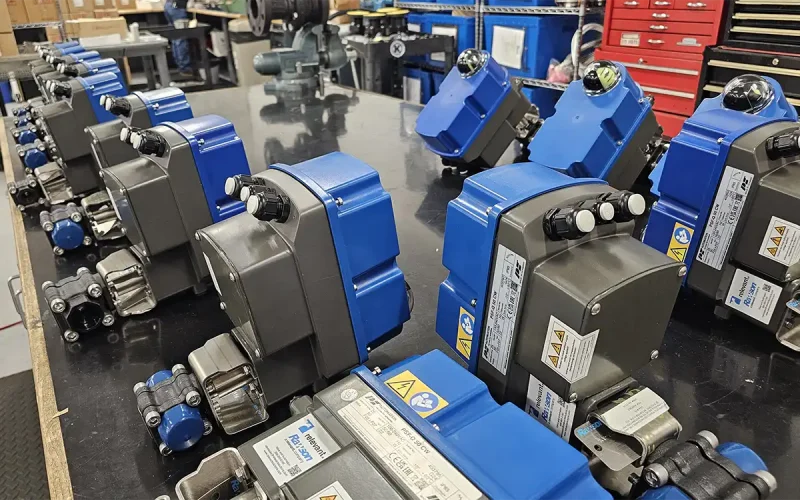
Honeywell Kromschröder burner control units, win because they combine burner sequencing, ignition, flame monitoring, diagnostics, local visibility, configurable parameters, and industrial integration options in one compact combustion control platform. For plants running furnaces, ovens, kilns, boilers, dryers, and multi-burner systems, that means safer starts, faster troubleshooting, stronger system visibility, and a more scalable path for modern industrial combustion control.
These burner control units are not just simple flame safeguard devices. Depending on the model and configuration, they can control, ignite, and monitor industrial burners, support flame supervision, display operating status and fault information, and help reduce control cabinet complexity by placing critical burner functions closer to the equipment.
That combination is why maintenance, reliability, engineering, and operations teams evaluate Kromschröder platforms when they need dependable combustion control. Here at Relevant Solutions, we help industrial teams evaluate burner control technology in the context of the full fired equipment system, not just the device itself.

What Are Kromschröder Burner Control Units?
Kromschröder burner control units are industrial combustion devices used to control, ignite, and monitor gas burners in intermittent or continuous operation. In practical terms, they help manage the burner sequence, supervise flame presence, respond to faults, and support safer burner operation.
The BCU 370, for example, is used for industrial forced draft burners of unlimited capacity and supports flame supervision with either a UV scanner or flame rod. It also supports air pressure monitoring through an external pressure switch during pre-purge and operation.
The newer BCU 4 platform goes further by combining the automatic burner control unit, ignition transformer, manual and automatic mode, operating and fault status display, and user interface in a compact metal housing. This makes the platform especially useful for burner-level installation, where local visibility and reduced wiring complexity can improve maintainability.
Why Kromschröder Burner Control Units Win Over Basic Burner Control Approaches
Kromschröder burner control units win because they bring more of the burner control task closer to the burner. Instead of relying only on a central cabinet with separate devices, these platforms can consolidate key burner functions into a compact local unit, including ignition, sequencing, display, and diagnostics.
This is valuable in multi-burner environments where downtime, nuisance trips, wiring complexity, and troubleshooting time directly affect production. When burner-related control tasks are handled locally, the central furnace control system can focus on broader process coordination rather than every individual burner event.
The practical result is a control architecture that supports both safety and maintainability. Operators gain local status visibility, technicians gain diagnostic access, and engineers gain a more structured way to integrate combustion control into the broader automation environment.
Key Reasons Kromschröder Burner Control Units Win in Industrial Applications
Kromschröder burner control units stand out because they address the priorities industrial teams care about most: safe burner operation, faster troubleshooting, cleaner integration, and long-term maintainability. The table below breaks down the key advantages that make these combustion control platforms a strong choice for demanding fired equipment applications.
| Ranking Factor | Why It Matters | How Kromschröder BCUs Support It |
|---|---|---|
| Burner-level control | Reduces dependence on large centralized wiring architectures. | BCU 4 units combine burner control, ignition transformer, manual/automatic mode, display, and HMI in a compact housing. |
| Flame monitoring | Helps verify safe burner operation. | BCU platforms support flame control using UV, ionization, or furnace chamber temperature depending on model and application. |
| Diagnostics | Reduces troubleshooting time. | Program status, device parameters, error codes, statistics, and flame signal level can be read from the device display. |
| Integration | Supports connected combustion systems. | Optional BCM 400 bus module supports standardized fieldbus systems including PROFIBUS, PROFINET, EtherNet/IP, and Modbus TCP. |
| Safety architecture | Supports demanding fired equipment requirements. | BCU 460/465 units are documented for systems up to SIL 3 pursuant to EN 61508 and can be used up to PL e under EN ISO 13849-1. |
| Maintenance | Speeds replacement and parameter transfer. | The parameter chip card can transfer valid parameters from an old unit to a replacement unit. |
How Kromschröder Burner Control Units Improve Safety by Controlling the Burner Sequence
A burner control unit must help the burner start only when the required operating conditions are satisfied. In fired equipment, that includes safe pre-purge, correct ignition conditions, flame proving, and reliable response to abnormal conditions.
Kromschröder platforms are designed to support this sequence-based approach. Depending on the application, the unit can work with safety interlocks, purge signals, defined ignition-position logic, and flame supervision to help ensure burners start, run, and shut down in a controlled manner.
For maintenance and reliability teams, this is one of the clearest reasons Kromschröder burner control units win. A strong combustion control platform does not only run the burner; it helps enforce repeatable operating logic that supports safe operation, code-conscious design, and easier fault isolation.
How Kromschröder Burner Control Platforms Simplify Troubleshooting and Commissioning
A burner control platform becomes more valuable when it provides clear diagnostic visibility at the equipment. Kromschröder devices can display program status, operating parameters, flame signal level, and fault status, giving technicians more information where the work is happening.
That local visibility helps shorten the gap between “the burner tripped” and “we know why.” Instead of relying only on remote cabinet indicators or automation screens, technicians can review burner-level information directly, then use that information to validate sensor signals, flame strength, sequencing, and fault history.
This is especially important in production environments where a single burner issue can disrupt a furnace zone, oven section, dryer, or batch process. Here at Relevant Solutions, we support combustion systems with an emphasis on practical maintainability because a well-designed control system should be safe, understandable, and serviceable.
How Kromschröder Burner Control Units Support Modern Automation and Connected Combustion Systems
Industrial combustion systems increasingly need more than hardwired start and stop signals. Plants want status visibility, fault history, process visualization, and integration with PLCs, HMIs, SCADA systems, and plantwide monitoring platforms.
The BCU platform supports this direction through optional fieldbus networking. With the BCM 400 bus module, BCU units can communicate through standardized fieldbus systems such as PROFIBUS, PROFINET, EtherNet/IP, and Modbus TCP, allowing control and monitoring through an automation system.
That makes Honeywell Kromschröder BCUs a strong fit for facilities modernizing burner management without losing the value of dedicated burner-level control. They can support the transition from isolated combustion equipment toward connected, data-informed operations.
How Kromschröder Burner Control Platforms Help Reduce Cabinet Complexity
Kromschröder burner control platforms can help reduce cabinet complexity by consolidating several burner-related functions into one local device. The BCU 4 platform combines burner control, ignition transformer, operating mode changeover, and status display in one compact housing.
This matters because combustion panels can become crowded, especially in multi-burner systems. Reducing separate devices, wiring runs, and cabinet-level complexity can support cleaner installation, easier documentation, and faster troubleshooting.
For engineering and maintenance teams, simpler architecture can also make long-term support easier. When core burner information is available near the burner and key functions are packaged in a purpose-built platform, teams can spend less time tracing scattered components and more time resolving the actual issue.
How Kromschröder Burner Control Units Fit Multiple Burner Control Strategies
Kromschröder burner control units are not limited to one burner style. Manufacturer documentation references applications involving staged, modulating, single-stage, two-stage, direct-ignited, and pilot-assisted burners, depending on model and configuration.
That flexibility matters for industrial facilities with mixed assets. A plant may have older furnaces, upgraded zones, package burners, and custom process heating equipment all operating under different control needs. A flexible combustion control platform gives engineers more options when standardizing parts, planning upgrades, or designing new fired equipment systems.
For example, the BCU 4 platform is used in applications involving directly ignited industrial burners, including modulating-controlled or stage-controlled burners. This makes it relevant for facilities that need a control approach adaptable enough to support different process heating requirements.
When Should You Choose a Kromschröder Burner Control Unit?
Choose a Kromschröder burner control unit when the application needs dependable burner sequencing, flame monitoring, diagnostic visibility, and industrial integration in a compact burner-level device. It is especially suitable when the system includes multiple burners, high uptime requirements, cabinet space constraints, or a need to connect burner data into an automation system.
A Kromschröder platform is also worth evaluating when replacing older burner controls. Newer devices can provide more configurable functionality, improved diagnostics, and a clearer path for connecting combustion data into broader plant systems.
Selection still needs to be application-specific. Flame detection method, burner type, safety requirements, fuel train design, purge strategy, fieldbus needs, enclosure location, and applicable codes all need to be reviewed before choosing a model.
Where Relevant Solutions Fits into the Decision
At Relevant Solutions, we help industrial teams evaluate combustion controls as part of the full burner management and fired equipment system. Our industrial combustion and control solutions include burners, valves, regulators, flame safeguard controls, burner management systems, flame monitoring systems, installation, commissioning, troubleshooting, and training support.
That matters because the best burner control unit choice is not only about the control unit. It is about how the burner, valve train, flame detection method, actuator, field wiring, safety interlocks, PLC, HMI, and operating procedure work together.
For readers comparing replacement options or planning a burner control upgrade, our industrial combustion and control solutions can help connect the technical selection to the real operating environment. Through Shop Relevant, we also help industrial buyers simplify access to automation, combustion, instrumentation, and rotating equipment products with the support of our technical team.
Key Takeaways
Kromschröder burner control units win because they combine burner-level control, ignition, flame monitoring, diagnostics, and integration options in a compact industrial platform. They are especially valuable for fired equipment where safe sequencing, uptime, troubleshooting speed, and automation connectivity matter.
For engineering and maintenance teams, the most important advantages are practical. These burner control platforms can reduce cabinet complexity, improve local visibility, support fieldbus integration, and provide a structured path for modernizing combustion control systems.
For procurement teams, the value is also lifecycle-driven. A burner control unit that is easier to diagnose, replace, parameterize, and integrate can reduce hidden operating costs long after the purchase order is complete.
Ready to Upgrade Your Burner Control Strategy?
Both basic flame safeguard controls and advanced burner control units play important roles in industrial combustion systems. Basic controls may be suitable for simple burner applications, but Kromschröder platforms are a stronger choice when your facility needs local diagnostics, configurable burner sequencing, flame monitoring, integration options, and a more maintainable combustion control architecture.
Here at Relevant Solutions, we help industrial teams evaluate burner control requirements across the full fired equipment system. Our team can review burner type, flame detection method, valve train layout, purge requirements, safety interlocks, PLC integration, and replacement goals to help determine whether Honeywell Kromschröder BCUs are the right fit for your application.
Contact our team at Relevant Solutions today to discuss your combustion control goals and find the right burner control path for your facility.
Frequently Asked Questions
Why Do Kromschröder Burner Control Units Win in Industrial Combustion Control?
Are Kromschröder BCUs the Same as a Burner Management System?
A Kromschröder BCU is a burner control unit, not the entire burner management system by itself. It can be a critical component within a broader burner management architecture that also includes safety interlocks, fuel train components, air control, PLCs, HMIs, and operating procedures.
Which Applications Commonly Use Kromschröder Burner Control Units?
Kromschröder Burner Control Units are commonly considered for industrial furnaces, ovens, kilns, boilers, dryers, and process heating equipment. They are especially useful where dependable burner sequencing, flame monitoring, local diagnostics, and automation connectivity are important.
Do Kromschröder Burner Control Units Support Fieldbus Communication?
Yes. Depending on the model and configuration, BCU platforms can support fieldbus communication through optional bus modules, including common industrial protocols such as PROFIBUS, PROFINET, EtherNet/IP, and Modbus TCP.
How Should a Facility Choose the Right Kromschröder Burner Control Units?
A facility should choose the right Kromschröder Burner Control Units by reviewing burner type, flame detection method, purge requirements, valve train design, safety requirements, fieldbus needs, cabinet layout, and replacement goals. At Relevant Solutions, we help connect those technical requirements to a practical burner control selection.